Two weeks ago I posted about The Wolf Among Us by Telltale games. I commented on how the game offers the player choices that seem to have weight thanks to the branching narrative structure of the game. I said that by giving the player some control over the story, the game tricked players into feeling that all of their decisions really mattered.
This week I intend to enhance that argument.
The Wolf Among Us is a very story driven game. Game mechanics take a back seat as the player becomes immersed in the world of Fabletown. The game is populated with characters that you come to know and care about and as the player you become increasingly invested in the characters and their roles in the story that unfolds around you. I think that this investment is key to making the choices ingame feel important. Sebastian Domsch says that "(choice situations) are invested with some form of motivation, that is: the player will be interested in the outcome of the choice and will expect one outcome to be better than another." In this case the motivation to make a choice comes from the players involvement in the narrative and feelings towards characters (good or bad). As you get to know the characters you from opinions about them, those opinions could change from one playthrough to another, but in any case the game does a good job of making you feel something for them. If you dislike a character you will probably choose to be a little harsh with them, or if you like a character you'll want to be nice. As you get to know characters better your choices become more and more motivated.
The game also does its best to make sure you know your actions will have consequences. When you respond to characters in certain ways a message appears onscreen telling you that the character "will remember that" and characters ingame also voice their opinions on choices you make, showing you an instant result of your choice. The largest decisions in the game, the ones that significantly affect the narrative path, actually take up the entire screen and all you can do is hover between your two choices as music blares ominously in the background.
As mentioned in the last blog, the player really has somewhat minimal control over the narrative, but the game tricks them into thinking they have a lot more. By investing the player and giving them motivation, the decisions are given weight, and by showing that actions have consequences, the choices become more meaningful. The player becomes used to the idea that their choices matter, and begins to think that all of their choices matter, even though many of them don't change a thing. In this way the game seems to become more real and personal to the player, enhancing their experience and immersion.
The way that The Wolf Among Us tells its story and portrays its characters gives the player a reason to play, a reason to choose the best option and makes them feel a part of the game. Despite its limited story paths it feels extremely interactive and personal. I think this is the biggest success of the game.
Showing posts with label Interactive. Show all posts
Showing posts with label Interactive. Show all posts
Sunday, 10 April 2016

Sunday, 3 April 2016
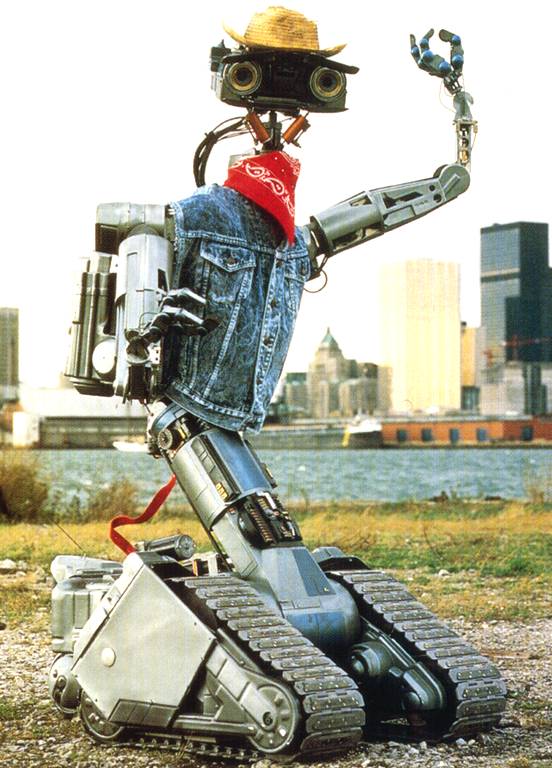
Jonny 5 is alive (Game Blog number 5: FEZ)
This week I played FEZ, a puzzle platformer with a clever 3D twist. (Get it? Because you can twist the map. heh)
The premise is crazy simple, you play as Gomez, a small blocky character who receives a Fez that allows him to turn the world in 3 dimensions to explore maps from a new perspective. The game focuses on this mechanic with maps that must be turned back and fourth over and over in order to solve them.
The Game does contain some fairly complex story, but most of it is backstory or world history that you slowly uncover as you play. I personally didn't see much of this backstory as I didn't finish the game and it takes a long time for the story to really make an appearance. Also from what I can gather you could play the game and totally ignore the story, it's really only there to enhance the gameplay which is the most important aspect of the game. Using Marie-Laurie Ryan's terminology that would make this a 'Narrative Game,' "in a narrative game, story is meant
to enhance gameplay." (2009, p. 45)
As for story in-game story, there is next to none, the game is level based with very few story nodes as you play. The levels essentially create an open world which can be explored at your pleasure but it always comes back to the gates that you must unlock by collecting cubes. Thanks to these gates there is some game progression as you unlock more of them and uncover more of the map to be explored. These points, where the player must visit a specific location to advance, are where the few story nodes are located, but there are no choice nodes so the game is still linear.
Thanks to the lack of story in this game there really is no character development. Gomez is essentially a husk for the player to inhabit and explore the world, otherwise known as an avatar. This means that "the player identifies primarily as their in-game representative rather than with
them as a separate, fictional character." As put by Jessica Alred (2013, p. 357). Because Gomez is 'empty' of character, the player is able to project themselves onto him, like an image onto a blank screen. The effect of this is that there is no separation between the player and their in-game persona, they can explore the world as themselves. The fact that Gomez's appearance is basically featureless adds to this effect.
To be honest I still felt next to no involvement to the embedded narrative. That is to say I barely noticed that there was an embedded narrative, but through the avatar of Gomez I did find myself very immersed in the emergent gameplay, or the traversal of the game. Despite there being no penalty for dying in-game I still felt bad for dying. Since I was the character, when he died in a way I died, and when he reached an objective I reached the objective. So even though there was next to no narrative in the game I still felt connected and immersed thanks to the avatar nature of Gomez.
Fez is a clever game in its design and is a lot of fun to play. Its lack of story isn't an issue since it makes up for it with clever and interesting gameplay that draws the player in and keeps them entertained. I'd give it 6 jonnys.
Bai now.
References:
Jessica, A. (2013) Characters. The Routledge Companion to Video Game Studies, pp. 375
Marie-Laurie, R. (2009) From narrative games to playable stories: toward a poetics of interactive narrative StoryWorlds: A Journal of Narrative Studies, Volume 1, 2009, pp. 45
Friday, 25 March 2016
What week are we up to now? (Wolf among us game blog)
Coolio, this week I played The Wolf Among Us. This is one of the Telltale games and has that typical telltale branching story with choices that can lead you down different paths.
You play as Bigby, AKA Big bad wolf, who is the sheriff of Fabletown, a secret community of fairytale characters living in New York disguised as regular humans. Following a murder you are dragged into an investigation where you must uncover the murderer's identity and save as many people as you can.
This game offers a lot of story interaction, some of it really doesn't change the story at all but other choice moments can lead you down some very different storylines, leading to characters deaths, characters responding to you differently, and changing how much information your character has about the murder.
Because some of these choices can change the narrative path so drastically, all of the decisions in the game seem to have more weight. The player understands that they do have some control over the story, and the game uses this to trick the player into feeling like they have a lot of control. In reality of course there are only so many paths you can travel down and only so many outcomes they can lead to. For instance no matter how you play the first episode it always ends with you in a bar making a decision between only two possible story paths. This method allows the game creators to keep the size of the game minimal while still making the player feel as though there are many possibilities in-game.
All up I'm really enjoying the game and I plan on playing it through to the end. Hopefully I make the right decisions.
Bish bash bosh, SuperPlumpHam signing off.
You play as Bigby, AKA Big bad wolf, who is the sheriff of Fabletown, a secret community of fairytale characters living in New York disguised as regular humans. Following a murder you are dragged into an investigation where you must uncover the murderer's identity and save as many people as you can.
This game offers a lot of story interaction, some of it really doesn't change the story at all but other choice moments can lead you down some very different storylines, leading to characters deaths, characters responding to you differently, and changing how much information your character has about the murder.
Because some of these choices can change the narrative path so drastically, all of the decisions in the game seem to have more weight. The player understands that they do have some control over the story, and the game uses this to trick the player into feeling like they have a lot of control. In reality of course there are only so many paths you can travel down and only so many outcomes they can lead to. For instance no matter how you play the first episode it always ends with you in a bar making a decision between only two possible story paths. This method allows the game creators to keep the size of the game minimal while still making the player feel as though there are many possibilities in-game.
All up I'm really enjoying the game and I plan on playing it through to the end. Hopefully I make the right decisions.
Bish bash bosh, SuperPlumpHam signing off.
Friday, 18 March 2016
Tres el juego (Game blog the third, 'The Banner Saga')
On this fine week I played 'The Banner Saga.' I actually started playing this about two months ago and picked it up again for this blog. I really enjoyed this game. The art is super nice, the music fits well, the story and setting are enjoyable and immersive, and the gameplay is really cool.
The story follows two main characters down different paths that eventually meet (not that I played that far) and you make decisions and fight battles along the way. The combat takes on a table-top like strategy gameplay, while the rest of the game consists of cutscenes, dialogue boxes, and as I mentioned before, beautiful artwork.
There are a lot of 'choice situations' throughout this game. If you don't know what a choice situation is, it's basically a point in the game where a player must make a decision with two or more outcomes. They also tend to have some motivation, or rather the player has a reason to care about the choice, but they may or may not realise that they are actually making a choice.
In The Banner Saga the player usually realises that they are making a choice and that their decision may have consequences. The game gives you enough information to speculate about what the outcome of your choice may be but not enough to know exactly what's going to happen. Because of this there is a certain weight to your choices and a hope that you made the right, or optimal choice.
One example is when an member of your caravan gets heavily drunk and starts making a scene which the rest of your caravan members do not appreciate. You have the choice of punishing him with varying levels of seriousness or just letting him off the hook. You are given enough information in this decision to know that if you let him off the hook then other members may become angry and leave, but punishing him too harshly may make your followers fear you.
Other choices, like whether to let your daughter join a fight with you or not, make the player feel like the story could be significantly changed by making a wring move. I think this is a brilliant effect because it keeps the player engaged and feeling as though they are driving the story even when the battles aren't taking place.
I think that the choices in this game are really important to the story and the experience. I think it is important that the player realises they are making a choice, because that give weight to their decision, and because of the limited information, there is a sense of anticipation over the outcome which keeps the player invested.
In all the gameplay is very well planned and lends itself perfectly to the style of story being told by the game.
Hamsizzle out.
The story follows two main characters down different paths that eventually meet (not that I played that far) and you make decisions and fight battles along the way. The combat takes on a table-top like strategy gameplay, while the rest of the game consists of cutscenes, dialogue boxes, and as I mentioned before, beautiful artwork.
There are a lot of 'choice situations' throughout this game. If you don't know what a choice situation is, it's basically a point in the game where a player must make a decision with two or more outcomes. They also tend to have some motivation, or rather the player has a reason to care about the choice, but they may or may not realise that they are actually making a choice.
In The Banner Saga the player usually realises that they are making a choice and that their decision may have consequences. The game gives you enough information to speculate about what the outcome of your choice may be but not enough to know exactly what's going to happen. Because of this there is a certain weight to your choices and a hope that you made the right, or optimal choice.
One example is when an member of your caravan gets heavily drunk and starts making a scene which the rest of your caravan members do not appreciate. You have the choice of punishing him with varying levels of seriousness or just letting him off the hook. You are given enough information in this decision to know that if you let him off the hook then other members may become angry and leave, but punishing him too harshly may make your followers fear you.
Other choices, like whether to let your daughter join a fight with you or not, make the player feel like the story could be significantly changed by making a wring move. I think this is a brilliant effect because it keeps the player engaged and feeling as though they are driving the story even when the battles aren't taking place.
I think that the choices in this game are really important to the story and the experience. I think it is important that the player realises they are making a choice, because that give weight to their decision, and because of the limited information, there is a sense of anticipation over the outcome which keeps the player invested.
In all the gameplay is very well planned and lends itself perfectly to the style of story being told by the game.
Hamsizzle out.
Friday, 11 March 2016
Blogeridoo number 2 (Prince of Persia game blog)
Okilly dokilly, so this week I played Prince of Persia. It was pretty fun despite the weird camera movement and a couple of slightly clunky game mechanics. Most of the game is jumping around very linear levels to reach objectives whilst dispatching a few enemies along the way.
This game was very much a 'ludus' type of game. That is a game with a clear goal and simple rules for how to reach that goal and win. I think this game also falls under the definition of a 'top down', or 'narrative game' as explained by Marie-Laure Ryan in her paper 'From Narrative Games to Playable Stories.' In short, she says a 'top down' game is designed so that the narrative is already set in place by the game creator, as well as problems to be solved and mechanics to solve them. The player is not free to play as they choose, they must play by the rules. Similarly, a 'narrative game' gives you rules to play by and goals to reach, but the narrative takes a back seat and is only there to give some context to the 'play.'
In Prince of Persia I found myself not really caring about the story so much as I just wanted to jump around and fight and spin on a pole. I felt this was the real core of the game. There were cutscenes for days, but they mostly felt like they were in the way of my experience. They pulled me out of my interaction and made me sit through a short film instead of playing.
In this way I don't think the cutscenes added much to the game. While they helped me understand why I was doing things, I didn't really care why. I just wanted to do stuff uninterrupted.
Since the story was of so little interest to me, I found I didn't care that I had little to no effect on what happened in the story. There was no branching or decisions that had to be made, instead the story was entirely linear, and I think it worked for the game. Since it was so linear in both story and level design, I always knew what to do and where to go which meant I could just focus on getting there and having fun doing it. In a game that focuses on the story and not the gameplay it is much more important to make the player feel part of the story, but here I think it would have been better to have a little less story and a little more play.
To summarise, I enjoyed playing the game, but I didn't care about the story. The linear narrative was a good decision to keep it simple so play could be the focus, but the extensive cutscenes felt unneeded and at times very frustrating. Also spinning on poles is fun in games, I'm keen for more pole mechanics.
This game was very much a 'ludus' type of game. That is a game with a clear goal and simple rules for how to reach that goal and win. I think this game also falls under the definition of a 'top down', or 'narrative game' as explained by Marie-Laure Ryan in her paper 'From Narrative Games to Playable Stories.' In short, she says a 'top down' game is designed so that the narrative is already set in place by the game creator, as well as problems to be solved and mechanics to solve them. The player is not free to play as they choose, they must play by the rules. Similarly, a 'narrative game' gives you rules to play by and goals to reach, but the narrative takes a back seat and is only there to give some context to the 'play.'
In Prince of Persia I found myself not really caring about the story so much as I just wanted to jump around and fight and spin on a pole. I felt this was the real core of the game. There were cutscenes for days, but they mostly felt like they were in the way of my experience. They pulled me out of my interaction and made me sit through a short film instead of playing.
In this way I don't think the cutscenes added much to the game. While they helped me understand why I was doing things, I didn't really care why. I just wanted to do stuff uninterrupted.
Since the story was of so little interest to me, I found I didn't care that I had little to no effect on what happened in the story. There was no branching or decisions that had to be made, instead the story was entirely linear, and I think it worked for the game. Since it was so linear in both story and level design, I always knew what to do and where to go which meant I could just focus on getting there and having fun doing it. In a game that focuses on the story and not the gameplay it is much more important to make the player feel part of the story, but here I think it would have been better to have a little less story and a little more play.
To summarise, I enjoyed playing the game, but I didn't care about the story. The linear narrative was a good decision to keep it simple so play could be the focus, but the extensive cutscenes felt unneeded and at times very frustrating. Also spinning on poles is fun in games, I'm keen for more pole mechanics.
Wednesday, 2 March 2016
Her Story
This week I played Her Story. A fairly simple game in which you are searching through a police footage archive to find out information about the murder of Simon Smith. And now I must answer how the game told it's story.
The gameplay is deceptively simple. At the beginning of the game you are shown a computer desktop with a search window open. Two readme files on screen tell you how to play. You must type key words into the search bar to find videos which you can piece together to understand the story. As you learn more you find new words to search and discover even more. This simple mechanic is the core of the game and aside from using some other helpful features like labeling videos, it is all you do in the game.
It occurred to me while I was playing Her Story that there are actually two stories in the game. There is the story of the murder, the one that you are piecing together from videos, and there is the story of the player, or rather the character you are playing as.
The murder story is one you cannot change. It is in your power as the player to see and understand more or less of the story, but no matter what you do the story stays the same. It's like reading a novel. The story happened in the past and you are discovering it as you go.
The other story, you the player, is one you can change. You decide how much your character understands. This story is happening in the present. As you make decisions the story is created.
What you eventually find out is that Eve, one of the twin girls being interviewed, is your character's mother, and you are searching through the footage to understand what happened to your parents.
The ending is open to interpretation. You could choose for your story to never end, watching and re-watching videos forever, or you could choose to end it before you know much of anything about the murder. On top of that you never get to see definitive evidence of what happened. You only hear the girls stories. In this way your experience of the game could be considered to not be a story, since a story has to end. But you do still see a story in the game, and if you play long enough (and take some notes along the way) you can understand it.
In all I enjoyed the game. It was unconventional and could be considered boring or tedious, but seeing the story unfold felt rewarding. The game relies on you to piece together and understand the story, and if you do you should enjoy it too.
The gameplay is deceptively simple. At the beginning of the game you are shown a computer desktop with a search window open. Two readme files on screen tell you how to play. You must type key words into the search bar to find videos which you can piece together to understand the story. As you learn more you find new words to search and discover even more. This simple mechanic is the core of the game and aside from using some other helpful features like labeling videos, it is all you do in the game.
It occurred to me while I was playing Her Story that there are actually two stories in the game. There is the story of the murder, the one that you are piecing together from videos, and there is the story of the player, or rather the character you are playing as.
The murder story is one you cannot change. It is in your power as the player to see and understand more or less of the story, but no matter what you do the story stays the same. It's like reading a novel. The story happened in the past and you are discovering it as you go.
The other story, you the player, is one you can change. You decide how much your character understands. This story is happening in the present. As you make decisions the story is created.
What you eventually find out is that Eve, one of the twin girls being interviewed, is your character's mother, and you are searching through the footage to understand what happened to your parents.
The ending is open to interpretation. You could choose for your story to never end, watching and re-watching videos forever, or you could choose to end it before you know much of anything about the murder. On top of that you never get to see definitive evidence of what happened. You only hear the girls stories. In this way your experience of the game could be considered to not be a story, since a story has to end. But you do still see a story in the game, and if you play long enough (and take some notes along the way) you can understand it.
In all I enjoyed the game. It was unconventional and could be considered boring or tedious, but seeing the story unfold felt rewarding. The game relies on you to piece together and understand the story, and if you do you should enjoy it too.
Subscribe to:
Posts (Atom)